
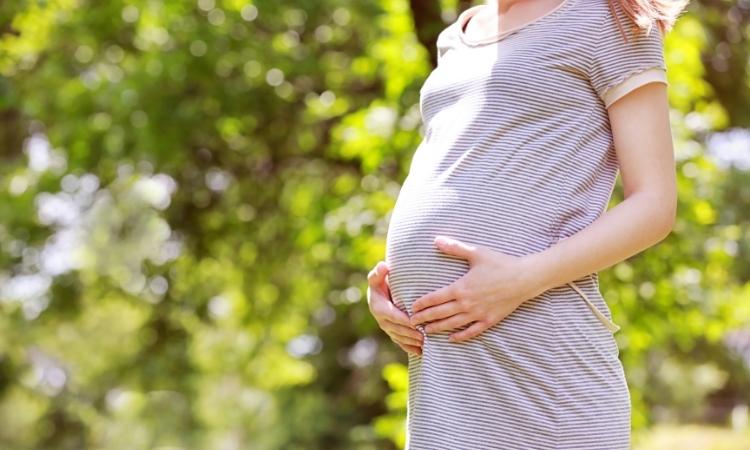
Microbiota e probiotici in gravidanza possono influenzare la salute materna e neonatale attraverso il metabolismo, la regolazione immunitaria e la prima trasmissione microbica al bambino. Sostenere l’eubiosi intestinale e vaginale durante la gestazione può contribuire al benessere della madre, allo sviluppo fetale e alla formazione del microbiota del neonato.
Questo articolo è dedicato a un argomento di grande importanza: il ruolo che il microbiota (vaginale e intestinale) svolge durante la gravidanza, e come i probiotici possono aiutare a mantenerne l’eubiosi e a proteggere la salute di madre e bambino, alla luce della ricerca scientifica più recente.
L’argomento può essere suddiviso in tre grandi aree, a cui abbiamo dedicato altrettanti capitoli. Clicca sui link qui sotto per leggere i capitoli:
Capitolo I. Infezioni vaginali e complicanze gestazionali.
Capitolo II. Disordini metabolici e infiammatori della gestante.
Capitolo III. Prevenzione delle patologie atopiche del bambino.
Bibliografia dei tre capitoli
1: Sohn, Kristin, and Mark A. Underwood. “Prenatal and postnatal administration of prebiotics and probiotics.” Seminars in Fetal and Neonatal Medicine. Vol. 22. No. 5. WB Saunders, 2017. https://doi.org/10.1016/j.siny.2017.07.002
2: Hantoushzadeh, Sedigheh, et al. “Comparative efficacy of probiotic yoghurt and clindamycin in treatment of bacterial vaginosis in pregnant women: A randomized clinical trial.” The Journal of Maternal-Fetal & Neonatal Medicine 25.7 (2012): 1021-1024. https://doi.org/10.3109/14767058.2011.614654
3: Kuon, R. J., et al. “Higher prevalence of colonization with Gardnerella vaginalis and gram-negative anaerobes in patients with recurrent miscarriage and elevated peripheral natural killer cells.” Journal of reproductive immunology 120 (2017): 15-19. https://doi.org/10.1016/j.jri.2017.03.001
4: Rostok, M., et al. “Potential vaginal probiotics: safety, tolerability and preliminary effectiveness.” Beneficial microbes 10.4 (2019): 385-393. https://doi.org/10.3920/BM2016.0123
5: Russo, R., E. Karadja, and F. De Seta. “Evidence-based mixture containing Lactobacillus strains and lactoferrin to prevent recurrent bacterial vaginosis: a double blind, placebo controlled, randomised clinical trial.” Beneficial microbes 10.1 (2019): 19-26. https://doi.org/10.3920/BM2018.0075
6: Bohbot, J. M., et al. “Efficacy and safety of vaginally administered lyophilized Lactobacillus crispatus IP 174178 in the prevention of bacterial vaginosis recurrence.” Journal of gynecology obstetrics and human reproduction 47.2 (2018): 81-86. https://doi.org/10.1016/j.jogoh.2017.11.005
7: Laue, C., et al. “Effect of a yoghurt drink containing Lactobacillus strains on bacterial vaginosis in women–a double-blind, randomised, controlled clinical pilot trial.” Beneficial microbes 9.1 (2018): 35-50. https://doi.org/10.3920/BM2017.0018
8: Heczko, Piotr B., et al. “Supplementation of standard antibiotic therapy with oral probiotics for bacterial vaginosis and aerobic vaginitis: a randomised, double-blind, placebo-controlled trial.” BMC women’s health 15.1 (2015): 115. https://doi.org/10.1186/s12905-015-0246-6
9: Tomusiak, Anna, et al. “Efficacy and safety of a vaginal medicinal product containing three strains of probiotic bacteria: a multicenter, randomized, double-blind, and placebo-controlled trial.” Drug design, development and therapy 9 (2015): 5345. https://doi.org/10.2147/DDDT.S89214
10: Pendharkar, Sonal, et al. “Vaginal colonisation by probiotic lactobacilli and clinical outcome in women conventionally treated for bacterial vaginosis and yeast infection.” BMC infectious diseases 15.1 (2015): 255. https://doi.org/10.1186/s12879-015-0971-3
11: Vicariotto, Franco, Luca Mogna, and Mario Del Piano. “Effectiveness of the two microorganisms Lactobacillus fermentum LF15 and Lactobacillus plantarum LP01, formulated in slow-release vaginal tablets, in women affected by bacterial vaginosis: a pilot study.” Journal of clinical gastroenterology 48 (2014): S106-S112. https://doi.org/10.1097/mcg.0000000000000226
12: Othman, Mohammad, Zarko Alfirevic, and James P. Neilson. “Probiotics for preventing preterm labour.” The Cochrane Library (2007). https://doi.org/10.1002/14651858.CD005941.pub2
13: Myhre R, Brantsaeter AL, Myking S, et al. Intake of probiotic food and risk of spontaneous preterm delivery. Am J Clin Nutr. 2011; 93:151–7. https://doi.org/10.3945/ajcn.110.004085
14: Ho, M.; Chang, Y.Y.; Chang,W.C.; Lin, H.C.;Wang, M.H.; Lin,W.C.; Chiu, T.H. Oral Lactobacillus rhamnosus GR-1 and Lactobacillus reuteri RC-14 to reduce Group B Streptococcus colonization in pregnant women: A randomized controlled trial. Taiwan J. Obstet. Gynecol. 2016, 55, 515–518. https://doi.org/10.1016/j.tjog.2016.06.003
15: Dallanora, Suelen, et al. “Do probiotics effectively ameliorate glycemic control during gestational diabetes? A systematic review.” Archives of gynecology and obstetrics 298.3 (2018): 477-485. https://doi.org/10.1007/s00404-018-4809-2
16: He, Mingqian, and Bingyin Shi. “Gut microbiota as a potential target of metabolic syndrome: the role of probiotics and prebiotics.” Cell & bioscience 7.1 (2017): 54. https://doi.org/10.1186/s13578-017-0183-1
17: Laitinen K, Poussa T, Isolauri E, The nutrition, allergy, mucosal immunology and Intestinal microbiota group. Probiotics and dietary counselling contribute to glucose regulation during and after pregnancy: a randomised controlled trial. Br J Nutr 2009;101:1679–87. https://doi.org/10.1017/S0007114508111461
18: Luoto R, Laitinen K, Nermes M, Isolauri E. Impact of maternal probiotic-supplemented dietary counselling on pregnancy outcome and prenatal and postnatal growth: a double-blind, placebo-controlled study. Br J Nutr 2010;103:1792–9. https://doi.org/10.1017/S0007114509993898
19: Ilmonen J, Isolauri E, Poussa T, Laitinen K. Impact of dietary counselling and probiotic intervention on maternal anthropometric measurements during and after pregnancy: a randomized placebo controlled trial. Clin Nutr 2011;30:156–64. https://doi.org/10.1016/j.clnu.2010.09.009
20: Wickens, Kristin L., et al. “Early pregnancy probiotic supplementation with Lactobacillus rhamnosus HN001 may reduce the prevalence of gestational diabetes mellitus: a randomised controlled trial.” British Journal of Nutrition 117.6 (2017): 804-813. https://doi.org/10.1017/S0007114517000289
21: Asemi, Z., et al. “Effect of daily consumption of probiotic yoghurt on insulin resistance in pregnant women: a randomized controlled trial.” European journal of clinical nutrition 67.1 (2013): 71. https://doi.org/10.1038/ejcn.2012.189
22: Asemi Z, Jazayeri S, Najafi M, et al. Effects of daily consumption of probiotic yoghurt on inflammatory factors in pregnant women: a randomized controlled trial. Pak J Biol Sci 2011;14:476–82. https://doi.org/10.3923/pjbs.2011.476.482
23: Brantsaeter AL, Myhre R, Haugen M, et al. Intake of probiotic food and risk of preeclampsia in primiparous women. The Norwegian Mother and Child cohort study. Am J Epidemiol 2011; 174:807–815. https://doi.org/10.1093/aje/kwr168
24: Soderborg, Taylor K., et al. “Microbial transmission from mothers with obesity or diabetes to infants: an innovative opportunity to interrupt a vicious cycle.” Diabetologia 59.5 (2016): 895-906. https://doi.org/10.1007/s00125-016-3880-0
25: Stiemsma, Leah T., and Stuart E. Turvey. “Asthma and the microbiome: defining the critical window in early life.” Allergy, Asthma & Clinical Immunology 13.1 (2017): 3. https://doi.org/10.1186/s13223-016-0173-6
26: Abrahamsson TR, Jakobsson HE, Andersson AF, Bjorksten B, Engstrand L, Jenmalm MC. Low gut microbiota diversity in early infancy precedes asthma at school age. Clin Exp Allergy. 2014;44(6):842–50. https://doi.org/10.1111/cea.12253
27: Kalliomaki M, Kirjavainen P, Eerola E, et al. Distinct patterns of neonatal gut microflora in infants in whom atopy was and was not developing. J Allergy Clin Immunol. 2001; 107:129–134. https://doi.org/10.1067/mai.2001.111237
28: Fujimura KE, Sitarik AR, Havstad S, Lin DL, Levan S, Fadrosh D, Panzer AR, LaMere B, Rackaityte E, Lukacs NW, et al. Neonatal gut microbiota associates with childhood multisensitized atopy and T cell differentiation. Nat Med. 2016;22(10):1187–91. https://doi.org/10.1038/nm.4176
29: Arrieta, Marie-Claire, et al. “Early infancy microbial and metabolic alterations affect risk of childhood asthma.” Science translational medicine 7.307 (2015): 307ra152-307ra152. https://doi.org/10.1126/scitranslmed.aab2271
30: Marsland BJ, Gollwitzer ES. Host-microorganism interactions in lung diseases. Nat Rev Immunol. 2014;14(12):827–35. https://doi.org/10.1038/nri3769
31: Drago, Lorenzo, et al. “What Pediatricians Should Know before Studying Gut Microbiota.” Journal of clinical medicine 8.8 (2019): 1206. https://www.mdpi.com/2077-0383/8/8/1206
32: Tapiainen, Terhi, et al. “Maternal influence on the fetal microbiome in a population-based study of the first-pass meconium.” Pediatric research 84.3 (2018). https://doi.org/10.1038/pr.2018.29
33: Sommer, Felix, et al. “The resilience of the intestinal microbiota influences health and disease.” Nature Reviews Microbiology 15.10 (2017): 630. https://doi.org/10.1038/nrmicro.2017.58
34: Schultz, Michael, et al. “Administration of oral probiotic bacteria to pregnant women causes temporary infantile colonization.” Journal of pediatric gastroenterology and nutrition 38.3 (2004): 293-297. https://doi.org/10.1002/j.1536-4801.2004.tb12165.x
35: Pelucchi, Claudio, et al. “Probiotics supplementation during pregnancy or infancy for the prevention of atopic dermatitis: a meta-analysis.” Epidemiology 23.3 (2012): 402-414. https://doi.org/10.1097/EDE.0b013e31824d5da2
36: Zhang, Guo-Qiang, et al. “Probiotics for prevention of atopy and food hypersensitivity in early childhood: a PRISMA-compliant systematic review and meta-analysis of randomized controlled trials.” Medicine 95.8 (2016). https://doi.org/10.1097/MD.0000000000002562
37: Doege, Katja, et al. “Impact of maternal supplementation with probiotics during pregnancy on atopic eczema in childhood–a meta-analysis.” British journal of nutrition 107.1 (2012): 1-6. https://doi.org/10.1017/S0007114511003400
38: Garcia-Larsen, Vanessa, et al. “Diet during pregnancy and infancy and risk of allergic or autoimmune disease: A systematic review and meta-analysis.” PLOS medicine 15.2 (2018): e1002507. https://doi.org/10.1371/journal.pmed.1002507
39: Bertelsen, Randi J., et al. “Probiotic milk consumption in pregnancy and infancy and subsequent childhood allergic diseases.” Journal of Allergy and Clinical Immunology 133.1 (2014): 165-171. https://doi.org/10.1016/j.jaci.2013.07.032
40: Baldassarre, Maria, et al. “Rationale of probiotic supplementation during pregnancy and neonatal period.” Nutrients 10.11 (2018): 1693. https://www.mdpi.com/2072-6643/10/11/1693